

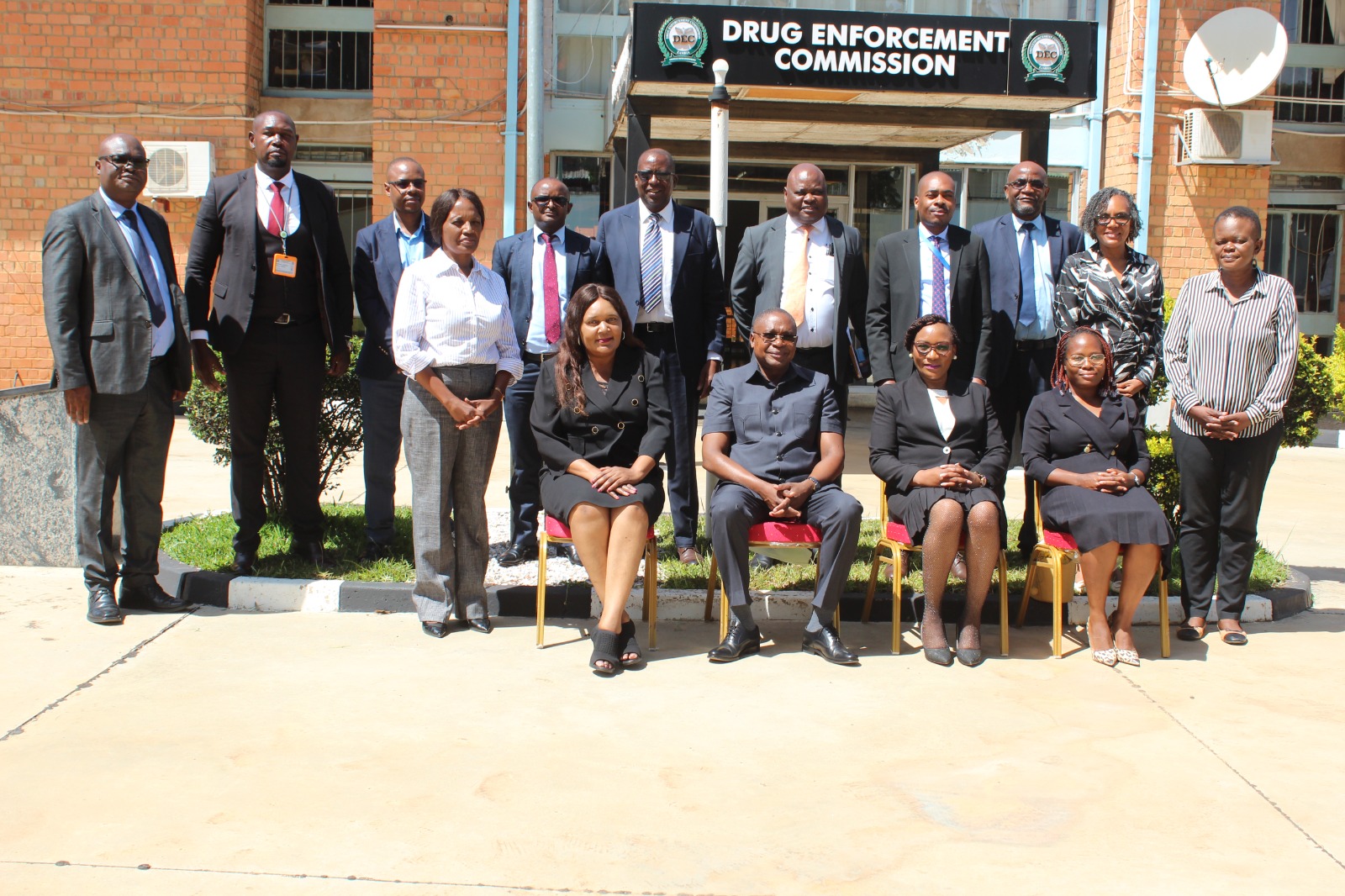
The Chairperson of the Human Rights Commission of Zambia (HRC-Z), Dr. Pamela Towela Sambo, today in the morning paid a courtesy on the Drug Enforcement Commission (DEC) Director General, Mr. Nason Banda, at the Commission’s headquarters in Lusaka.
The HRC-Z Chairperson and the DEC Director General had a fruitful engagement on issues of mutual concern relating to pre-trial detention of suspects involved in drug-related cases.
The Chairperson was accompanied by the Vice Chairperson Dr. Felicity Kayumba Kalunga, Commissioner Panic Malawo Chilufya, Commissioner Laura Miti, the Director General and staff from the HRC-Z Secretariat. The delegation was received by the DEC Director General, Deputy Director General Mrs. Beatrice K Mpanga and the Commission’s staff.
The courtesy visit was a special opportunity for the two Commissions to exchange views on how to address operational and systemic challenges affecting timely processing of drug-related cases whilst ensuring that the rights of suspects are upheld.
In her remarks, Dr. Sambo expressed concern over the excessive use of pre-trial detention in drug-related cases monitored by HRC-Z in the course of executing its constitutional mandate.
“In its complaints handling and monitoring mandate, the Commission has observed instances of prolonged pre-trial detention in drug-related cases. While recognizing that prosecutorial decisions fall under the mandate of the National Prosecution Authority, the Commission is aware that delays in taking suspects to court have, in some cases, been attributed to challenges such as delays in the availability of drug analysis and forensic reports within investigation dockets. The Commission is keen to engage with the DEC to better understand the operational and systemic challenges affecting timely court appearances, with a view to identifying practical, human rights-compliant solutions,” said Dr. Sambo.
The DEC Director General acknowledged the systemic challenges associated with pre-trial detention in Zambia and stressed the need for legal reforms to ensure timely analysis of suspected substances before suspects are detained.
“The law needs to be revisited so that drugs can be tested before conducting an arrest on someone and locking them up… just in case someone [who has been arrested] actually isn’t carrying drugs,” Mr. Banda said.
He reiterated the DEC’s commitment to upholding suspects’ right to the presumption of innocence.
“This has been a fruitful discussion, Chairperson; your remarks were on point. Please continue looking out for us when we go above and beyond. As DEC, we are soliciting for your help. Please help us with advocacy programmes that highlight what we are doing on the matters that we have discussed,” he said.
The two Commissions agreed to enhance their collaboration in a number of areas, and particularly in the facilitation of practical measures aimed at minimizing prolonged pre-trial detention and over-detention.