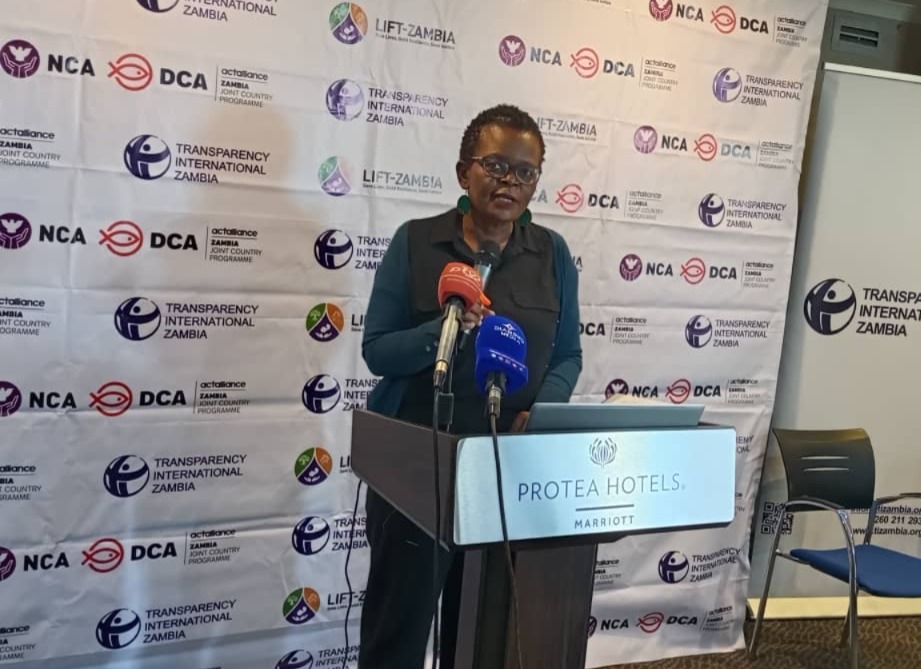
The Human Rights Commission of Zambia (HRC-Z) has urged all stakeholders to safeguard the country’s civic space, stressing that an open and inclusive civic environment is essential for citizens to participate meaningfully in national development, influence public policy, and hold public institutions accountable.
During the launch of the 2026 Civic Space and Legal-Policy Environment in Zambia report in Lusaka yesterday (1st July, 2026), HRC-Z Chairperson, Dr. Pamela Towela Sambo, said in her remarks delivered on her behalf by Commissioner Laura Miti that restrictions on the civic space inevitably undermine the enjoyment of human rights.
Dr. Sambo observed that civic space extends beyond the environment that facilitates political participation as it also enables people to exercise a broad range of human rights, including freedom of expression, peaceful assembly, association, access to information, participation in public affairs, freedom of religion or belief, and the protection of human rights defenders.
“Ultimately, protecting civic space in Zambia is a shared responsibility that requires sustained cooperation, mutual respect, and a common commitment to constitutionalism, the rule of law, and human rights,” said Dr. Sambo.
As Zambians prepare to vote in the August 13th General Election, Dr. Sambo called for tolerance, dialogue, inclusivity, and peaceful participation throughout the electoral process. She urged public authorities to ensure that the enforcement of laws remains impartial, constitutional, and fully consistent with regional and international human rights obligations.
Dr. Sambo commended Transparency International Zambia for producing a report that would contribute to the promotion of dialogue, evidence-based policy reforms, and stronger collaboration among stakeholders in protecting the civic space.
Ministry of Home Affairs and Internal Security Permanent Secretary, Mr. Dickson Matembo, described the civic space as a cornerstone of democratic governance, as it enables citizens to exercise their constitutional rights and participate in public affairs.
Mr. Matembo called upon law enforcement agencies to uphold constitutional rights and respect human dignity as they enforce the law.
“My Ministry is committed to creating an environment where citizens can freely exercise their constitutional rights while maintaining peace, security, and public order,” said Mr. Matembo.
He emphasized that maintaining a balance between security and fundamental freedoms is critical, noting that security without freedom weakens democracy, while freedom exercised without responsibility and respect for the law undermines public order and the rights of others.
The Civic Space and Legal-Policy Environment in Zambia report was produced by Transparency International Zambia with support from Norwegian Church Aid through the Lift Zambia Project.