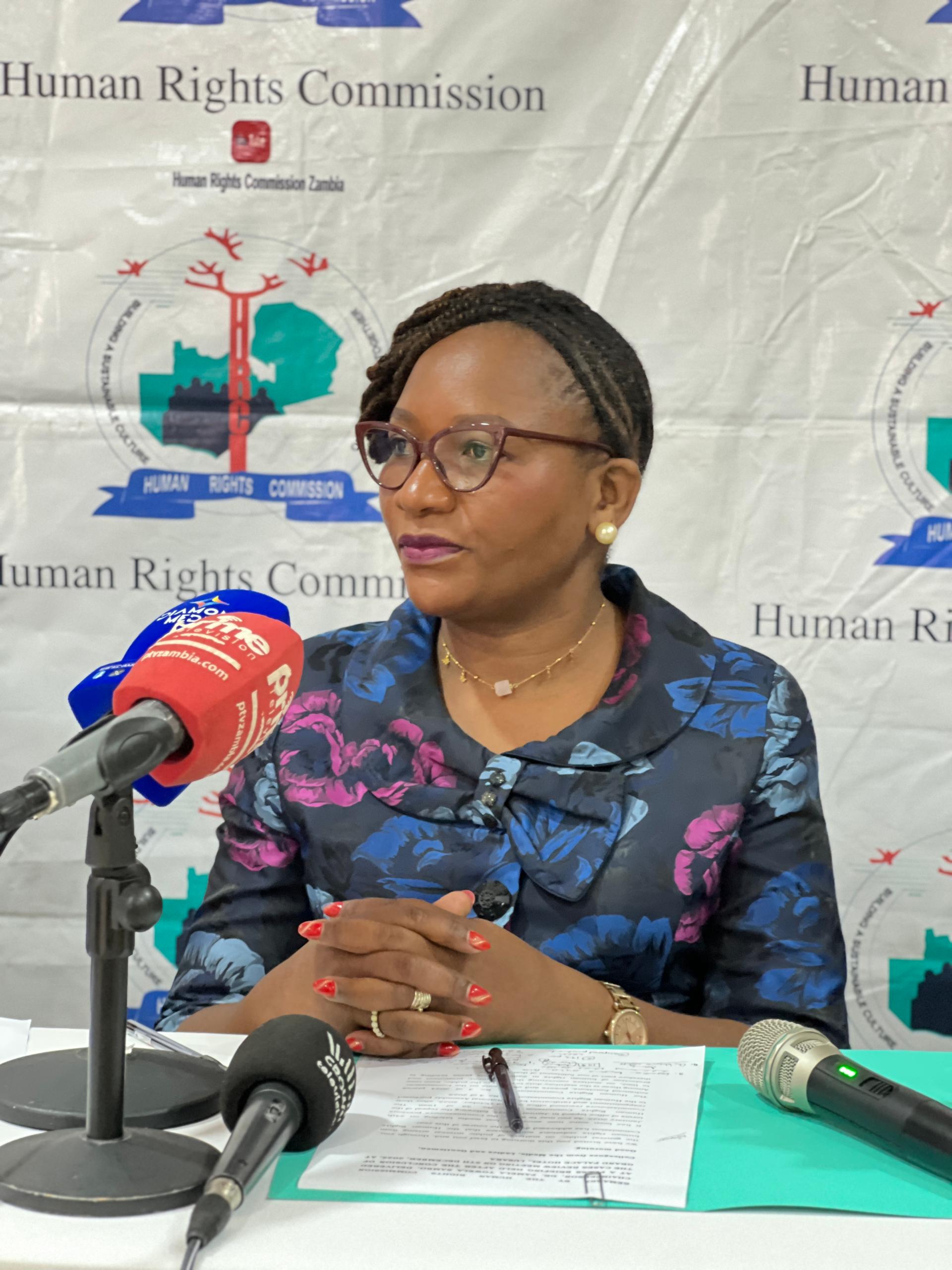
The Human Rights Commission of Zambia (HRC-Z), on Friday 5th December 2025, held a press briefing in Lusaka at the end of its first Cases Review Meeting held under the enhanced Human Rights Commission Act, No. 4 of 2024, marking a renewed commitment to transparency and accountability.
Speaking at the press briefing, Commission Chairperson Dr. Pamela Towela Sambo said the new law required HRC-Z to regularly inform the nation about the state of human rights in the country.
The Cases Review Meeting, conducted from 1st to 4th December and the first major task undertaken by Commissioners after resuming office in October, examined 193 cases. Of these, 148 were resolved, while 45 required further action to ensure victims receive full remedies.
Dr. Sambo stressed that each statistic represented a victim of human rights violation and that the Commission was committed to addressing the violations more decisively.
Unlawful detention topped the statistics, accounting for 150 cases, or more than three-quarters of all cases reviewed. The Commission noted with concern the widespread detention of suspects beyond the prescribed period, arrest of suspects before investigations, and the holding of suspects in poor conditions that in some instances led to severe illness and death.
In rural areas, overly strict police bond requirements, often demanding sureties employed in the civil service left many suspects detained simply because suitable sureties were unavailable. Systemic delays in post-mortem and forensic reports, slow docket movement, limited court interpreters and transport shortages further prolonged detention for many.
The Commission also reviewed 27 cases involving children, finding that despite the protections of the Children’s Code Act No. 12 of 2022 (CCA), violations remained common. Twenty-three children in conflict with the law had been detained contrary to the provisions of the CCA limiting child detention to 48 hours, and some were held without the knowledge of parents or social welfare officers. The Commission successfully secured the release of 11 children and placed them on diversion programmes.
Delays in disposing of children’s matters, which legally are supposed to be concluded within six months, remained due to shortages of specialised judicial officers. The rising incidents of school violence, including corporal punishment, bullying and gang attacks, was another major concern raised by Dr. Sambo.
Looking ahead, the Commission plans to intensify engagement with the Zambia Police Service to ensure accountability for unlawful conduct, strengthen monitoring of the Children’s Code Act, and work with the Ministry of Health to decentralise forensic and drug analysis services so that reports are processed in time to alleviate challenges leading to over detention of suspects.
The HRC will also collaborate closely with the Judiciary to speed up the disposal of children’s matters and, when necessary, initiate strategic public interest litigation as permitted under the new Human Rights Commission Act.
Dr. Sambo concluded by thanking the media for exposing human rights violations and abuses and reaffirmed the Commission’s renewed resolve, empowered by its strengthened legal framework, to safeguard the rights of every person in Zambia and hold all duty-bearers accountable.