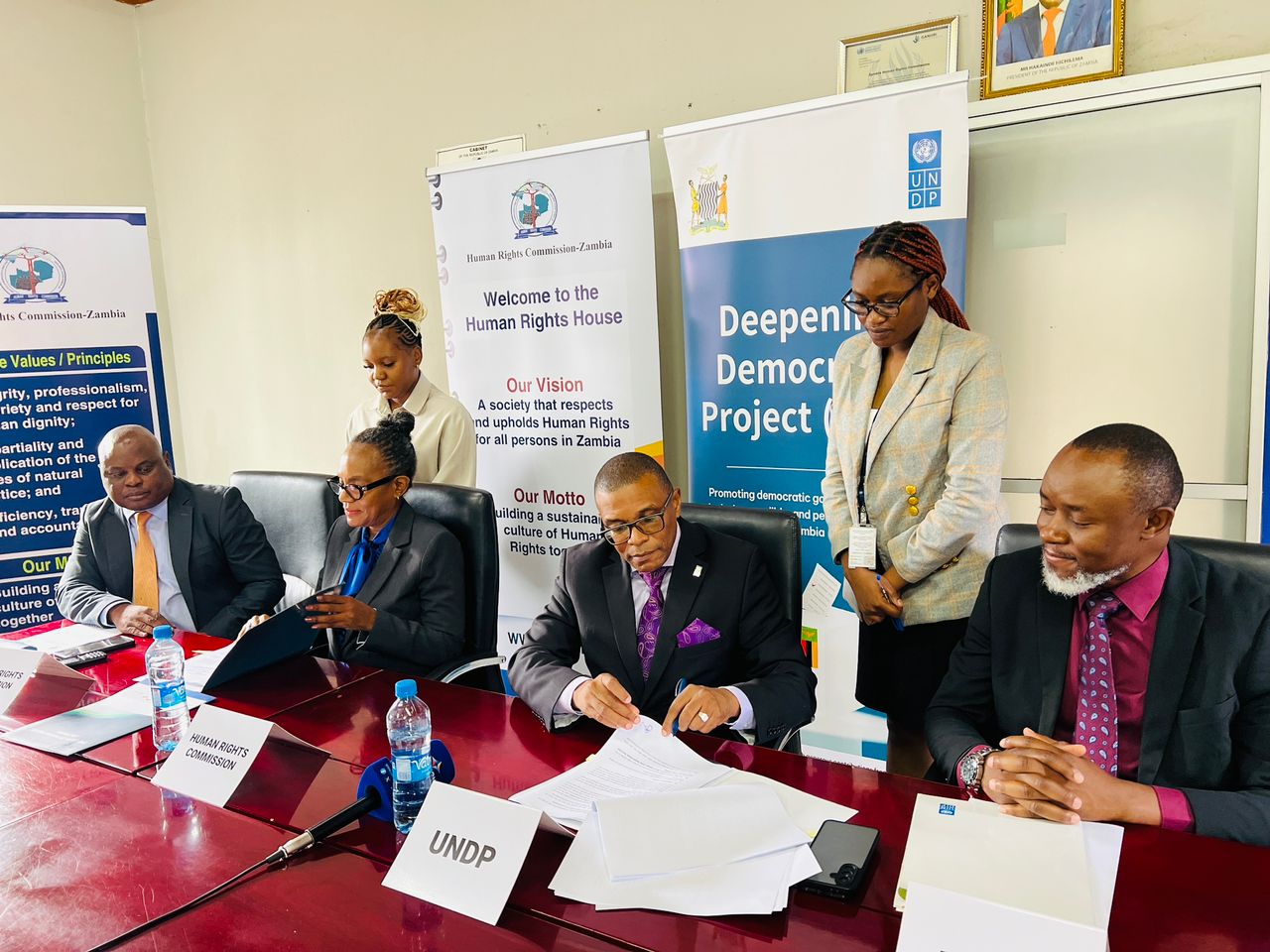
The Human Rights Commission of Zambia (HRC-Z) and the United Nations Development Programme (UNDP) have signed a Letter of Agreement to implement Phase II of the Early Warning and Early Response System (EWERS) aimed at strengthening mechanisms for preventing violence, protecting human rights and supporting democratic governance in Zambia.
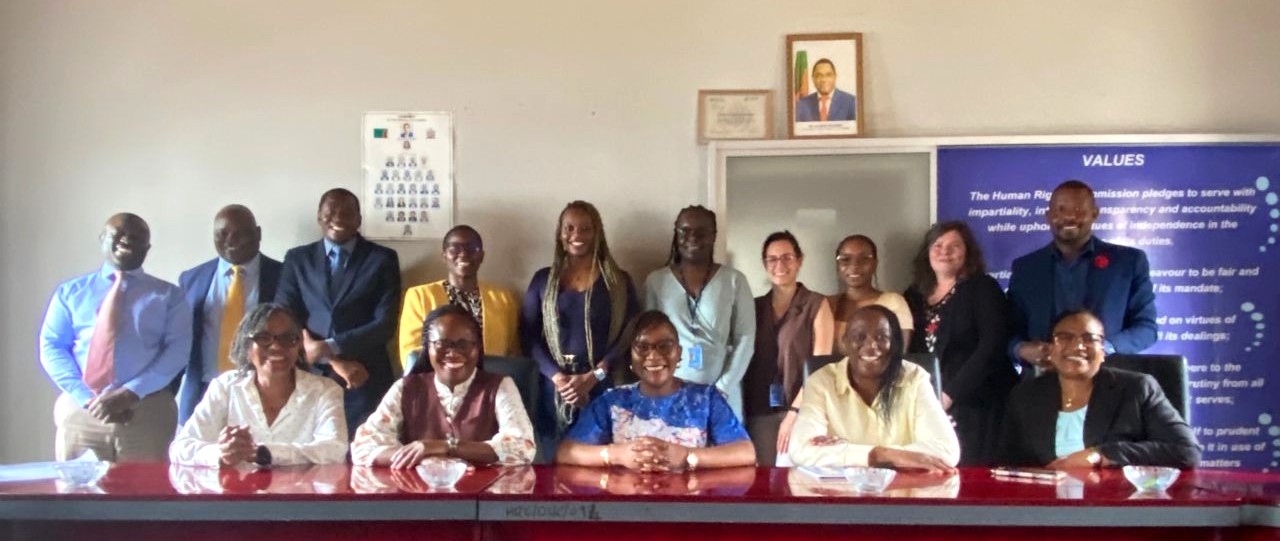
The agreement was signed today, 5th March 2026 at the Human Rights Commission Headquarters in Lusaka and forms part of the Deepening Democracy Project (DDP), which seeks to enhance the monitoring, reporting and response to emerging human rights risks, particularly in the context of electoral processes.
Speaking during the signing ceremony, HRC-Z Director General Ms. Mbololwa Wamunyima said the agreement represents an important step in strengthening the longstanding partnership between the Commission and UNDP.
She noted that the signing of the agreement was not merely a procedural milestone but a reaffirmation of the shared commitment by both institutions to advance democratic governance, strengthen institutions and promote and protect the rights and freedoms of all persons in Zambia.
Ms. Wamunyima recalled the successful pilot phase of the Early Warning and Early Response System implemented in 2021 under the “Strengthening Democracy in Zambia Project”.
The system was designed to identify, report, analyse and respond to threats and incidents of violence during the electoral process.
Through the EWERS online reporting platform, the Commission received and processed 328 cases related to threats or incidents of political violence during the 2021 General Elections. The reports were submitted from all ten provinces of Zambia within two months of the system’s launch in July 2021, demonstrating both the relevance of the platform and the public’s confidence in the Commission as an independent national human rights institution.
Ms. Wamunyima disclosed that the pilot phase contributed significantly to strengthening the institutional capacity of the Commission.
“Hosting the system supported the expansion of the Commission’s presence across the country, with new provincial offices established in Central, Muchinga, Luapula and North-Western Provinces, enabling the Commission to now maintain offices in all ten provinces. Additionally, the recruitment and deployment of 86 monitors across 81 districts strengthened the Commission’s operational footprint and improved its ability to monitor and respond to human rights concerns in communities,” said Ms. Wamunyima.
Ms. Wamunyima also noted that the EWERS Situation Room facilitated structured information sharing and collaboration among key stakeholders, allowing for coordinated and timely responses to incidents that threatened citizens’ rights, public order and democratic participation.
She added that the second phase of the initiative comes at a critical time as the Commission intensifies preparations for the upcoming electoral cycle and as Zambia continues to implement constitutional and electoral reforms.
“As a Commission established under Article 230 of the Constitution, our mandate compels us not only to react to violations but to prevent them. Early warning and early response mechanisms are therefore central to fulfilling our constitutional responsibilities,” she said.
Meanwhile, UNDP Resident Representative Dr. James Wakiaga said the signing of the agreement marks a renewed commitment to preventing violence and strengthening democratic resilience through early detection and timely response.
He explained that Phase II of EWERS will focus on strengthening the system through the reactivation of the EWERS Situation Room at the HRC Headquarters, the provision of mobile phones to field monitors to improve reporting, and training programmes aimed at building the capacity of HRC staff and partners.
The new phase will also enhance public awareness through community outreach, radio programmes and digital platforms to ensure citizens are informed about reporting channels, including the toll-free line and online platforms.
Dr. Wakiaga emphasised the importance of adopting a whole-of-government and whole-of-society approach involving oversight institutions, security agencies, civil society organisations, traditional leaders, youth networks and community groups.
The initiative is supported by development partners including the Governments of Denmark, Luxembourg, the Republic of Korea, and the United Kingdom’s Foreign, Commonwealth and Development Office (FCDO).
Both the Human Rights Commission and UNDP reaffirmed their commitment to strengthening cooperation in order to promote peace, protect human rights and safeguard democratic processes in Zambia.